rubbish bin
object for living
*2024
A rubbish bin – ordinary and familiar – becomes the starting point of an inquiry. A dialogue emerges between pragmatic product development and a symbolic reflection on our patterns of consumption and waste. A tension arises between two questions: What requirements influence a product that positions itself within real production and market structures while acting responsibly toward materials and resources? And how can an examination of our consumption and waste behaviour be translated into an object?
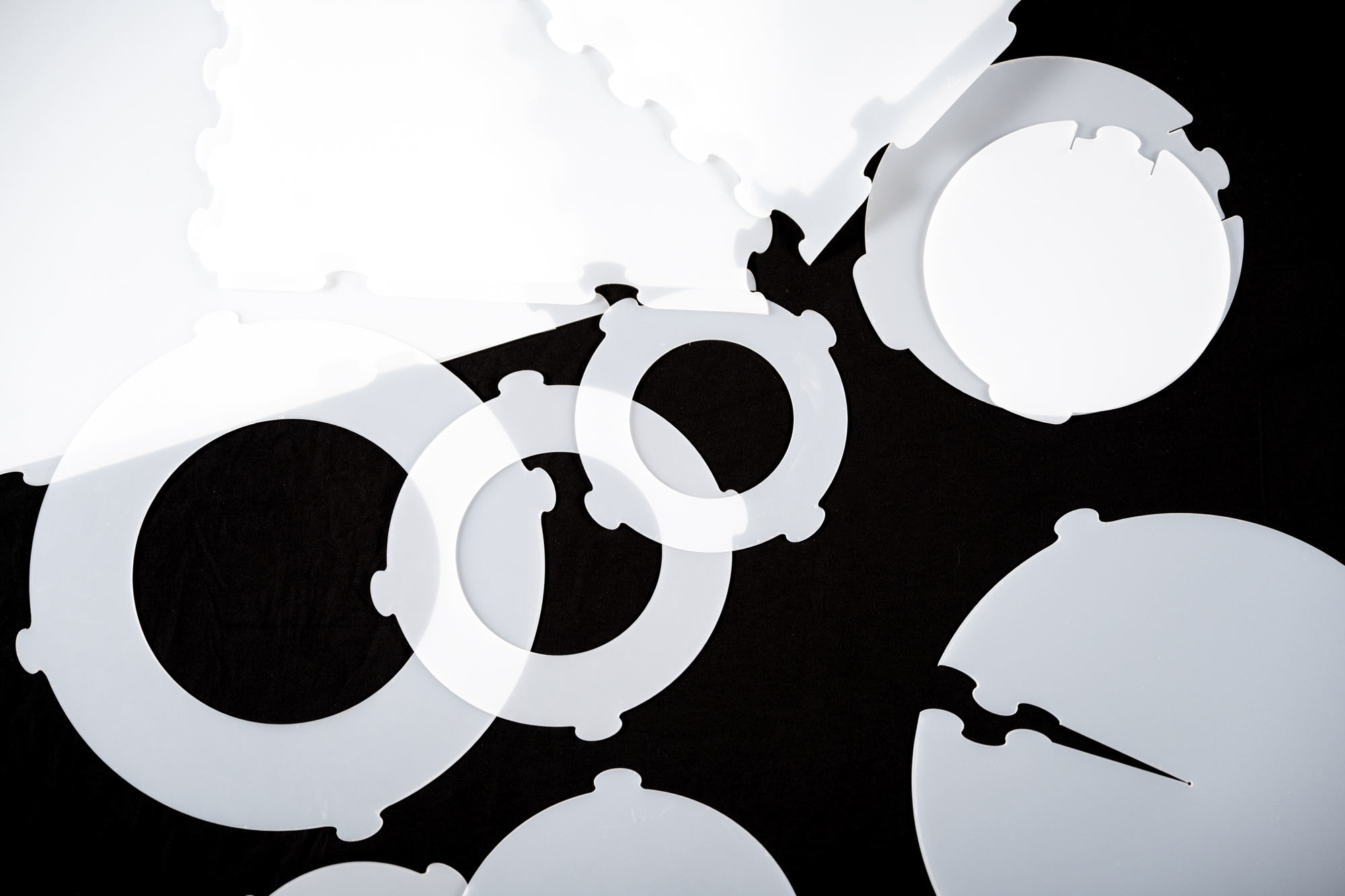
Central to the project is the interplay between interlocking tabs and the chosen materiality, each conditioning the other. It not only determines the manufacturing process but also enables formal qualities and application-specific variations of the object.
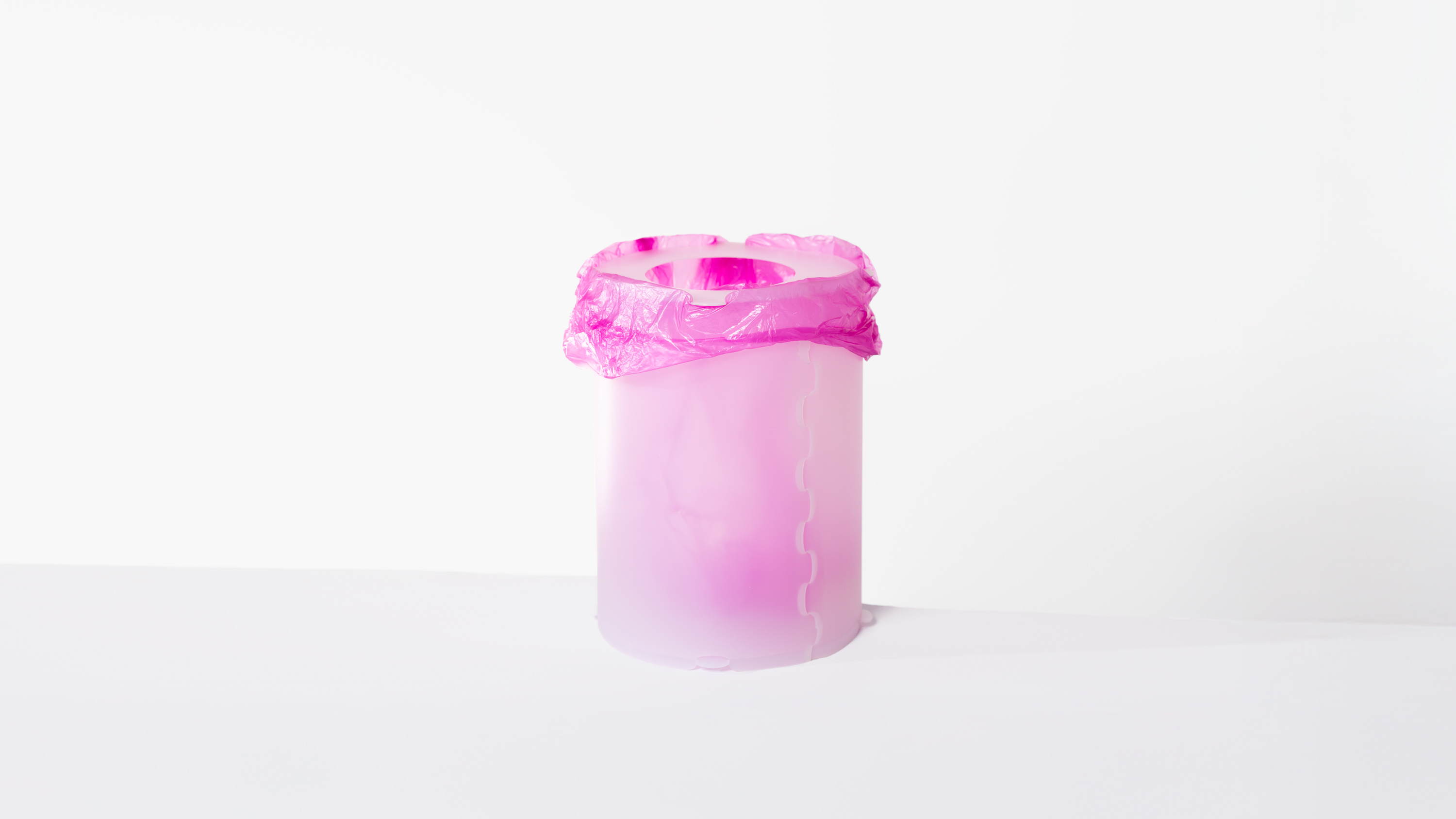
Flat, flexible mono-material sheets. Clear contours. A simple manufacturing process. That suffices for the parts to be assembled by a single person — without tools or additional components. Flat sheets create a body. A bin whose form and volume derive directly from material and connection system.
Through the translucent body, the contents remain subtly visible rather than concealed. Waste becomes part of the object’s visual expression. With each use, the bin changes its appearance, revealing traces of everyday life.
material: Polypropylene, 1.2mm
colour: transluzent matte
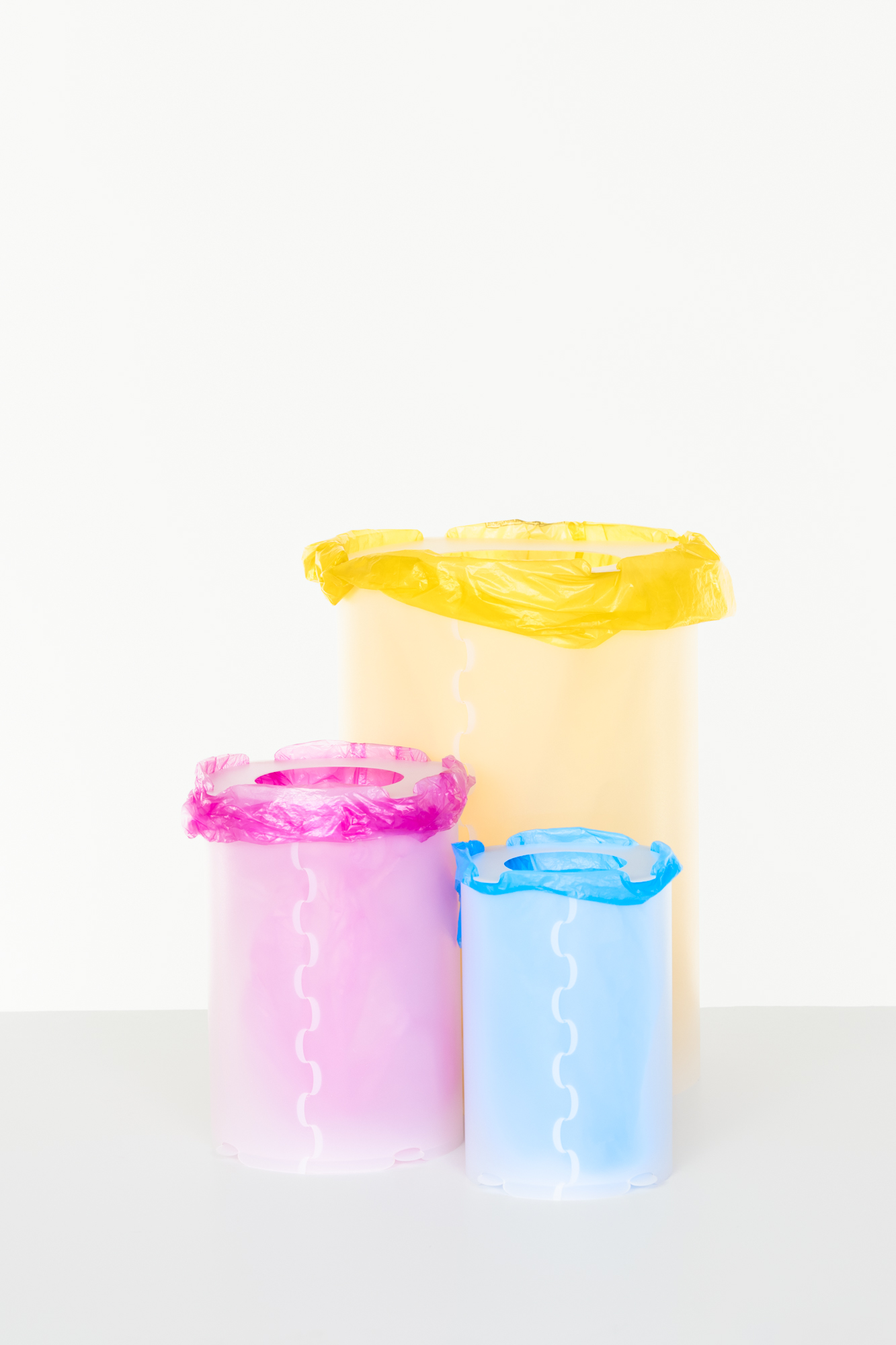
sizes: XS: H 30 cm, Ø 19.5 cm | S: H 36.5 cm, Ø 24 cm | L: H 54 cm, Ø 36 cm
capacity: XS: 8 L | S: 15 L | L: 52 L
INFO
Developed as part of my Master’s thesis.
Leif-Erik Schmitt

perforated lid

hinged lid

individual parts, flat, laser-cutted

family, 3 sizes

in context

rubbish bin
object for living
*2024
A rubbish bin – ordinary and familiar – becomes the starting point of an inquiry. A dialogue emerges between pragmatic product development and a symbolic reflection on our patterns of consumption and waste. A tension arises between two questions: What requirements influence a product that positions itself within real production and market structures while acting responsibly toward materials and resources? And how can an examination of our consumption and waste behaviour be translated into an object?
Central to the project is the interplay between interlocking tabs and the chosen materiality, each conditioning the other. It not only determines the manufacturing process but also enables formal qualities and application-specific variations of the object.
Flat, flexible mono-material sheets. Clear contours. A simple manufacturing process. That suffices for the parts to be assembled by a single person — without tools or additional components. Flat sheets create a body. A bin whose form and volume derive directly from material and connection system.
Through the translucent body, the contents remain subtly visible rather than concealed. Waste becomes part of the object’s visual expression. With each use, the bin changes its appearance, revealing traces of everyday life.
material: Polypropylene, 1.2mm
colour: transluzent matte
sizes: XS: H 30 cm, Ø 19.5 cm | S: H 36.5 cm, Ø 24 cm | L: H 54 cm, Ø 36 cm
capacity: XS: 8 L | S: 15 L | L: 52 L
INFO
Developed as part of my Master’s thesis.
Leif-Erik Schmitt